Thought for today:
"When I was growing up in the 50's, 'sexism' was simply an unnamed everyday activity that most males considered to be a normal way of life and most women were prepared to tolerate. What jobs there were to be had outside the home were generally filled by men, as were most of the seats occupied by serving Members of Parliament, along with the heads of most businesses and professions. When the average wife held a job outside the home, it was usually part-time and was performed to get some 'pin money' (A yorkshire term for money that the husband won't give his wife for essentials or little extras).
In those days, everyone knew their place, especially the women. Even the children in First School knew the natural order of things: girls aspired to become secretaries, bus conductresses, hairdressers, teachers, nurses and air stewardesses, whereas boys could dream of being train drivers, firemen, miners, doctors, air pilots, headmasters and blacksmiths etc.
This general attitude prevailed until the late sixties when the 'Women's Liberation Movement' which was a loose arrangement of feminist thinking, began to emerge and persisted throughout the 70's.
Many things are responsible for advancing the rights of women throughout the past fifty years including, the birth control pill which gave them power back over their own bodies, along with all aspects that went to increase their equality alongside men in both the work place and the home. In 2010, 'The Equality Act' essentially codified (cleaned up and made more orderly), the complicated array of acts and regulations which formed the basis of anti-discrimination law in great Britain. These were primarily the 'Equal Pay Act' of 1970, the 'Sex Discrimination Act' of 1975, the 'Race Relations Act' of 1976 and the 'Disability Discrimination Act' of 1995.
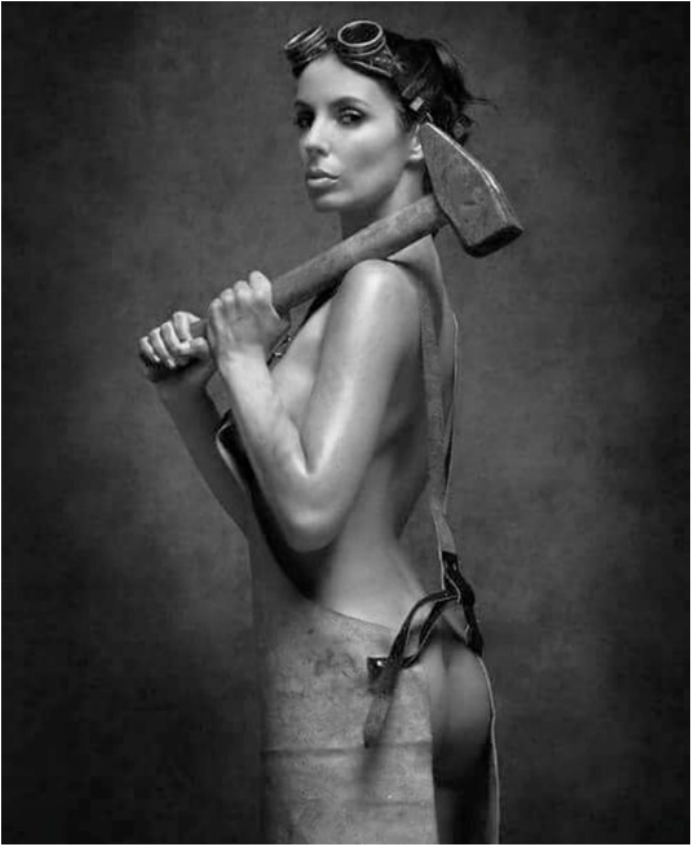
For a number of years into the New Millennium, one heard about some women who were breaking into certain jobs which had traditionally been held by men. One of the chaps I knew was a house husband and his wife was a lorry driver, and I even heard of a young woman in the Rochdale area who had decided to take over the role of neighbourhood Smithy after her father had died in the job. I was also told that if anyone thought that the female blacksmith from Rochdale was a member of the overweight feminist brigade, they should think again, as she was one of the Rochdale beauties who refused to be branded by any man, or have a dress code imposed on her at work, or get hot and bothered at her daily job.
The sad thing about all of the changes in the roles of the sexes during the past century is that the most important role of any man or woman, that of being a father or mother, is now harder to perform by the average couple in society. Many young couples simply cannot afford to have children today and provide for their upkeep because of the uncertainty of the economic times of austerity. There are no more 'jobs for life' and a worker is just as likely to get their redundancy notice at the end of the year instead of a raise in their wages like they could once look forward to. People are getting married later in life, getting on the housing ladder later than ever before, and having their 'child' when they approach their 40's. Only the couples who depend upon the welfare state can even contemplate having more than one child!
I recall when I was doing a course at Manchester University during the 1970's of being told of a panel beater attempting to knock out a dent in a sheet of metal. Whenever he succeeded in knocking out one dent, up it would come in another place on the metal sheet. This is essentially how I view the 'advancement' of equal rights between the sexes over the past half century. Whenever women have seemed to advance with regard to one thing, the female has lost out in respect to something else, just as important. In fact, unless one is prepared to live the life of a feckless mother who is dependent on the welfare state for everything she and her fourteen children by different fathers need, a woman has to come into a large inheritance, or have access to a great deal of money or a very rich partner in order to afford to become a mum of two today. If this is considered to be 'progress', all I can say is show me where!" William Forde: December 21st, 2016.
https://youtu.be/hms_GdvOKZY
"When I was growing up in the 50's, 'sexism' was simply an unnamed everyday activity that most males considered to be a normal way of life and most women were prepared to tolerate. What jobs there were to be had outside the home were generally filled by men, as were most of the seats occupied by serving Members of Parliament, along with the heads of most businesses and professions. When the average wife held a job outside the home, it was usually part-time and was performed to get some 'pin money' (A yorkshire term for money that the husband won't give his wife for essentials or little extras).
In those days, everyone knew their place, especially the women. Even the children in First School knew the natural order of things: girls aspired to become secretaries, bus conductresses, hairdressers, teachers, nurses and air stewardesses, whereas boys could dream of being train drivers, firemen, miners, doctors, air pilots, headmasters and blacksmiths etc.
This general attitude prevailed until the late sixties when the 'Women's Liberation Movement' which was a loose arrangement of feminist thinking, began to emerge and persisted throughout the 70's.
Many things are responsible for advancing the rights of women throughout the past fifty years including, the birth control pill which gave them power back over their own bodies, along with all aspects that went to increase their equality alongside men in both the work place and the home. In 2010, 'The Equality Act' essentially codified (cleaned up and made more orderly), the complicated array of acts and regulations which formed the basis of anti-discrimination law in great Britain. These were primarily the 'Equal Pay Act' of 1970, the 'Sex Discrimination Act' of 1975, the 'Race Relations Act' of 1976 and the 'Disability Discrimination Act' of 1995.
For a number of years into the New Millennium, one heard about some women who were breaking into certain jobs which had traditionally been held by men. One of the chaps I knew was a house husband and his wife was a lorry driver, and I even heard of a young woman in the Rochdale area who had decided to take over the role of neighbourhood Smithy after her father had died in the job. I was also told that if anyone thought that the female blacksmith from Rochdale was a member of the overweight feminist brigade, they should think again, as she was one of the Rochdale beauties who refused to be branded by any man, or have a dress code imposed on her at work, or get hot and bothered at her daily job.
The sad thing about all of the changes in the roles of the sexes during the past century is that the most important role of any man or woman, that of being a father or mother, is now harder to perform by the average couple in society. Many young couples simply cannot afford to have children today and provide for their upkeep because of the uncertainty of the economic times of austerity. There are no more 'jobs for life' and a worker is just as likely to get their redundancy notice at the end of the year instead of a raise in their wages like they could once look forward to. People are getting married later in life, getting on the housing ladder later than ever before, and having their 'child' when they approach their 40's. Only the couples who depend upon the welfare state can even contemplate having more than one child!
I recall when I was doing a course at Manchester University during the 1970's of being told of a panel beater attempting to knock out a dent in a sheet of metal. Whenever he succeeded in knocking out one dent, up it would come in another place on the metal sheet. This is essentially how I view the 'advancement' of equal rights between the sexes over the past half century. Whenever women have seemed to advance with regard to one thing, the female has lost out in respect to something else, just as important. In fact, unless one is prepared to live the life of a feckless mother who is dependent on the welfare state for everything she and her fourteen children by different fathers need, a woman has to come into a large inheritance, or have access to a great deal of money or a very rich partner in order to afford to become a mum of two today. If this is considered to be 'progress', all I can say is show me where!" William Forde: December 21st, 2016.
https://youtu.be/hms_GdvOKZY